
Dr. Marc Abreu: Research in Brain Temperature Science
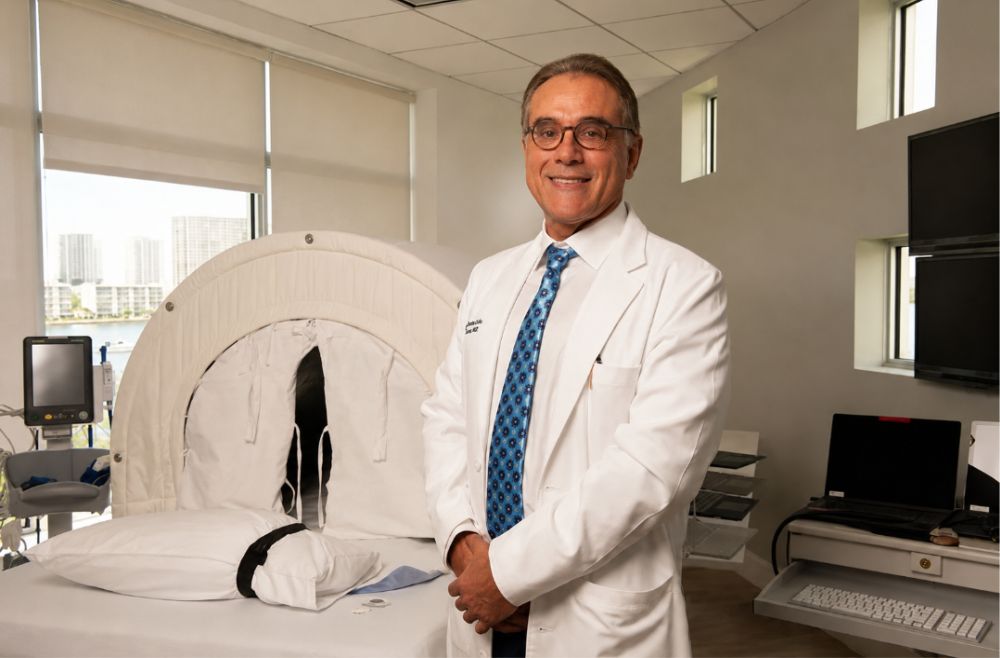
Dr. Marc Abreu is a physician and researcher whose work focuses on brain thermoregulation, neuroscience, and noninvasive temperature measurement. His research explores how the brain regulates its temperature and whether this process can be observed from outside the body without relying on invasive procedures. One of the main challenges in this field is finding a measurement site that minimizes interference from environmental conditions and other factors unrelated to brain activity. Dr. Abreu's work identified a potentially relevant anatomical structure in the orbit, where a blood vessel is surrounded by fat with low thermal conductivity. This arrangement may function as insulation, helping protect thermal signals from external influences. Recognizing the potential significance of this structure, he named it the Brain-Eyelid Thermal Regulatory Tunnel. His findings have contributed to ongoing research into alternative approaches to temperature monitoring and the questions surrounding their possible applications in clinical settings.
Dr. Marc Abreu is a physician and researcher whose work centers on brain thermoregulation and its measurement.
Background
Dr. Abreu trained in medicine and has focused his research on neuroscience and physiology, specifically on how the brain manages temperature and how that process might be observed from outside the body.
The question is harder than it appears. The brain is enclosed in bone, and standard measurement sites are subject to influences that have nothing to do with the brain itself. Progress required finding a site where that interference is minimized.
The Anatomical Finding
Dr. Abreu's work identified such a site in the orbit. There, a blood vessel is surrounded by fat with low thermal conductivity—an arrangement that functions as insulation.
The observation runs against a common assumption. Orbital fat is routinely removed in dissection without much thought, and the brain itself contains no adipose tissue. The presence of fat specifically arranged around a vessel in the orbit suggested a purpose: an insulated pathway carrying a thermal signal to the surface.
He named the structure the Brain-Eyelid Thermal Regulatory Tunnel.